
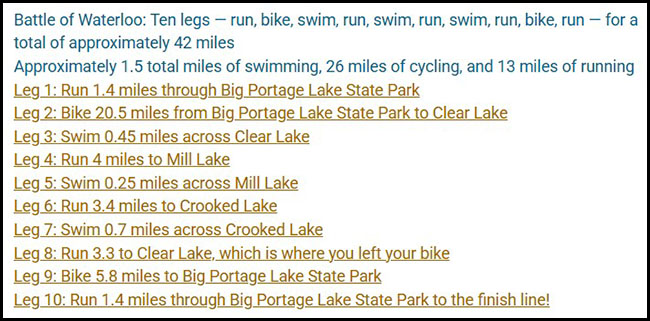
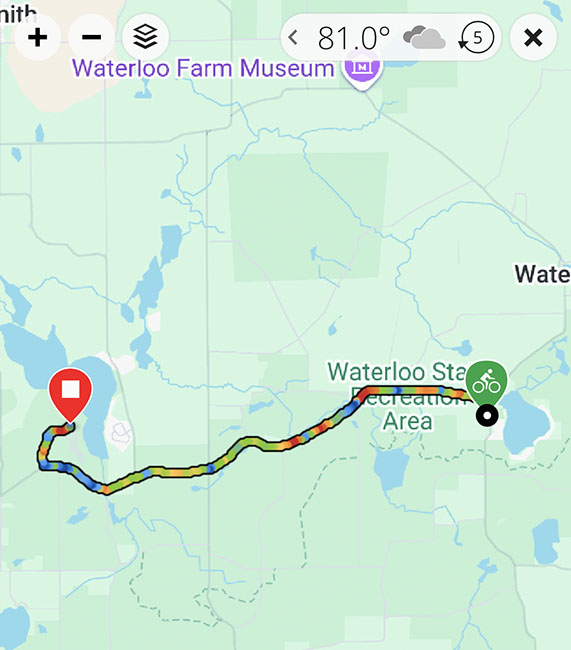
Epic Races truly lives up to its name when it hosts the Battle of Waterloo. It is the ultimate triathlon/adventure race that covers close to 42 miles over 10 stages around the Waterloo Recreation Area in Grass Lake, MI. It’s an opportunity for triathletes to mix things up from the traditional swim, bike, run routine. Instead, people ride their bikes from one park to another, swim across a lake, run on trails to get to another lake, swim across it to go for another run, and so on. Obviously it is quite an endurance event, but it’s also very much a logistical event because people need to carry their gear with them along the way.
While I have done the Battle of Waterloo a few times now (here are my 2021 and 2023 recaps) and it feels like I’ve got the hang of it, it doesn’t make the challenge any easier! I continue to learn lessons each time I do it. At this point I have a couple pages worth of notes to remind me what to bring and how the logistics of each stage plays out step-by-step. I have also taken a picture of my gear each time for a quick reference to make sure I have what I need. My notes came in handy this year when I started to feel pretty stressed the night beforehand. I had been out of town until a few days prior to the race, didn’t get a last practice session in like I had hoped, and didn’t start packing early like I meant to. Going through my checklist and notes kept me very organized, reminded me how it all worked, and eased some of my worries.

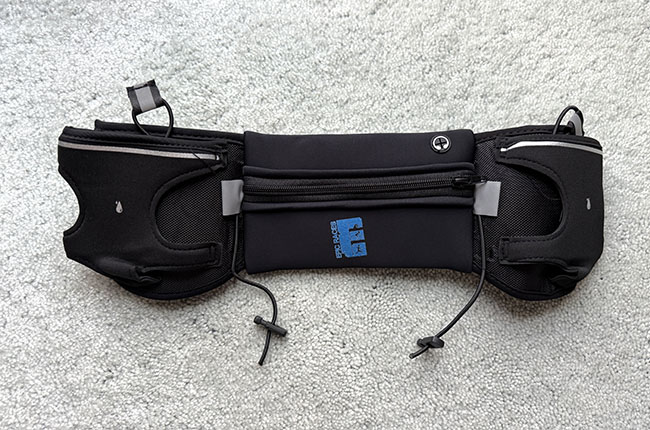
The picture of my gear is fairly representative of almost everything I took. For this race I like to use a tri suit with sleeves for the sake of more coverage from the sun. Although I put sunscreen on before the start, I know it will wash off by the time I finish five hours later so sleeves will help save my shoulders from sunburn. I have a very large dry bag/swim buoy for packing all of my gear. I wish I could be more minimal but I tend to be an over-packer and like to have my “stuff.” That includes my own fuel, so I have used a hydration vest the last couple times where I can pack the buoy in the main pocket and have flasks with my electrolyte drink (Skratch) plus Clif Bloks (with extra sodium) and a Picky Bar in front pockets.
I always like chatting with athletes at the race to learn how they approach it. I even study some of the race photos afterward because people have their own methods and they give me ideas for things I can change. While I’m more maximal with all of my gear, some people take their swim cap, goggles, and running shoes…and that’s it. They may tuck their shoes into their tri suit during the swim and run sockless with wet shoes. That means they need to make sure those shoes are secure enough so they don’t lose them along the way. I saw a shoe on the road during my bike ride then saw a guy riding the opposite direction who I assumed could be going back for it once he had realized. I saw a swim cap on the ground which obviously isn’t quite so critical, but another guy said he lost his goggles. Some people sling the swim buoy across their body during the bike ride and tuck it or hold it during the run. Others have a drawstring bag or backpack. The key is to train with the gear to hopefully work out any issues. I probably wouldn’t want to hold a buoy while I run and would also need to make sure it doesn’t bounce and annoy me while running if it’s in some kind of bag.
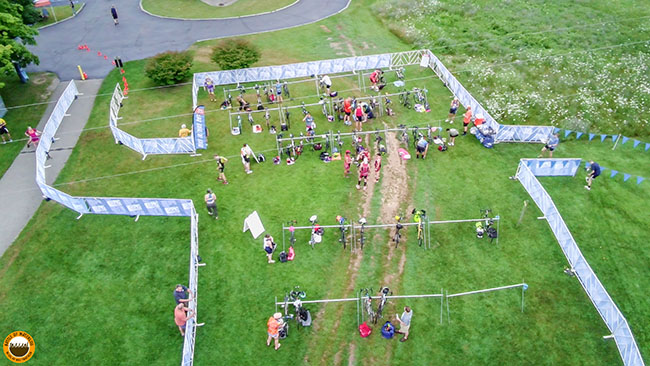
Sunday, July 27 was the big day. The drive takes me close to an hour and a half so I was pretty tired by the time I got to Big Portage Lake State Park around 6:15. I took my stuff to the transition area where we got to choose our own spots on the bike racks then I checked in to collect my packet.


The race features a “full battle” and “half battle” with the full athletes starting at 7:30. There was a pre-race meeting at 7:15 and I had plenty of time to get ready in the hour after I arrived.
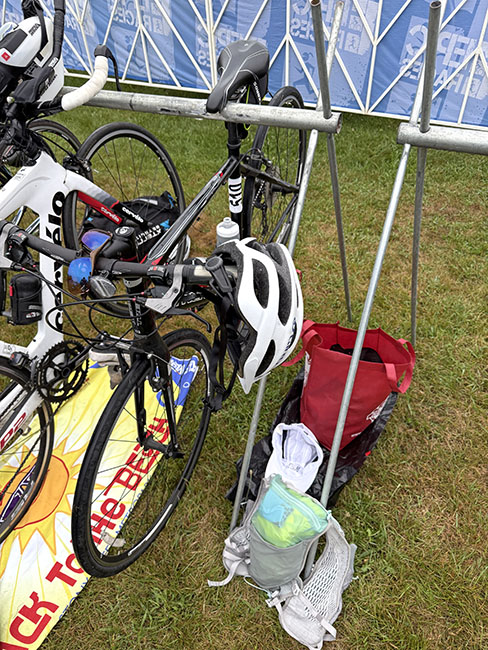
I caught up with some friends and did some stretching and jogged for a minute to warm up since the race would start with a run. Although it added weight, I chose to wear my vest for the first run for the sake of not wasting time fumbling with it before I took off on the bike.

We met at the start/finish line to go through a few things then the full battle athletes started with a run. Because the half battle athletes would head a different direction on the bike, they started after all of the full battle athletes cleared out so there would be no confusion about which way to turn.

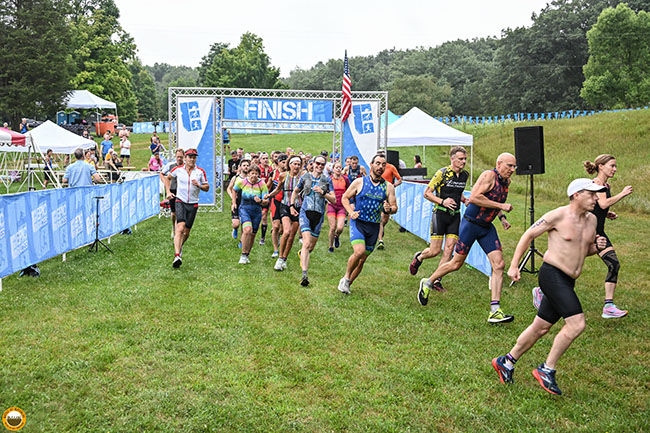

I had just done Epic’s Tri Goddess Tri at the same park at the end of June. Between that and racing there a number of times in the past, the first run course was very familiar. We had a little time on pavement at the beginning where people spaced out a bit then the majority of the run was on a trail. The run was only 1.6 miles long but that was enough time for the humidity to really hit me. The breeze on the bike would feel nice.

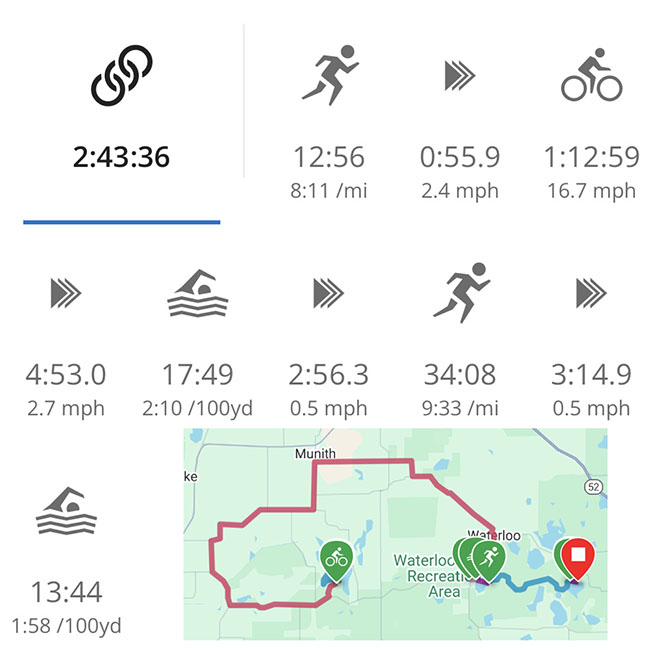
I had a quick transition of 56 seconds since I rode with my running shoes and just had to put my bike helmet on and head out with my bike.

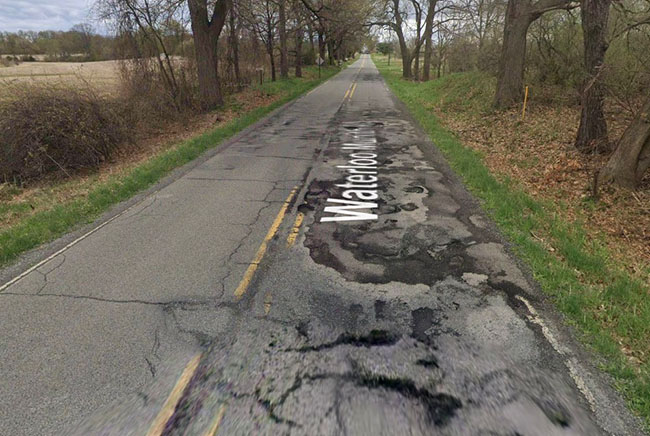
I knew the roads would get rough so I was extremely thankful for the stretch of smooth pavement we had at the beginning of the ride. Some of the roads in the area continue to deteriorate which results in a more challenging ride.
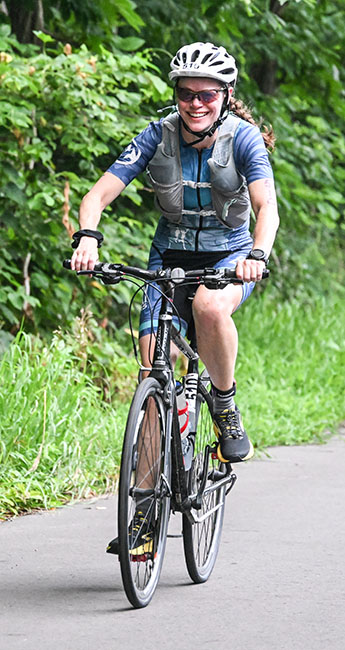
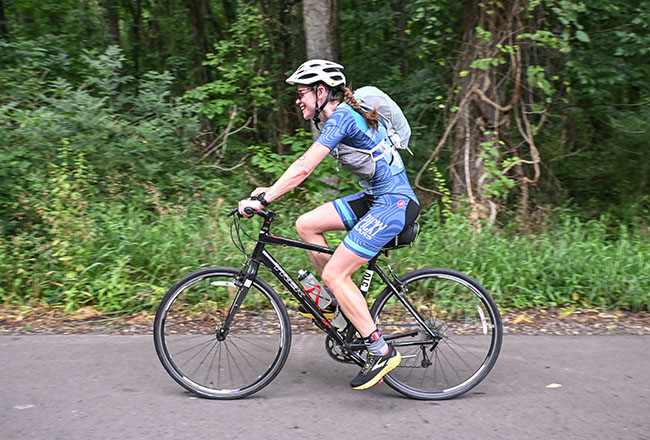
I hardly consider myself a cyclist and I regularly slack off on the bike because I’d rather run or swim. That already put me at my usual disadvantage on the bike leg, and going on vacation leading up to this race didn’t help either. It had been about two weeks since I’d been on a bike. I could get through the 20 miles but it wasn’t especially pretty.
Epic was kind enough to circle many of the bad potholes with paint to help us avoid them. Considering the number of potholes on those roads, that had to take a LOT of work! Luckily traffic out in the farmland was very minimal on a Sunday morning which provided some flexibility for weaving all over the road to avoid the worst stretches. I was even able to ride in the opposite lane when I needed to. I always debate bringing my mountain bike for races in this area and have done so several times in hopes of making the rough ride more tolerable. I didn’t do it this time and fortunately I escaped without a flat. I was gripping my handlebars way too tightly though! I didn’t wear gloves because it would have been one more thing for me to worry about in transition. I did notice one person running with them for the first leg though which may have been smart. My hands were so slippery that gloves would have come in handy.
I made a point of drinking close to 20 ounces of my electrolyte drink on the bike. I didn’t want to cramp during the swims and wanted to stay on top of hydration. The ride was so bumpy that I worried about trying to eat my Picky Bar because it could fly right out of my hands. I managed to scarf down half of one after about an hour on the bike.

I recorded 1:12:59 on my watch, good for 16.7 mph for just over 20 miles. When I parked my bike after the second leg it felt like the racks were especially full. I was convinced that I must be one of the last people. When I was running the fourth leg I crossed paths with some people doing half the battle and it suddenly hit me that they must have gotten to the bike area sooner and that’s why it looked so full. Even though they started about half an hour after the full battle, they only biked 5.8 miles during their second leg.
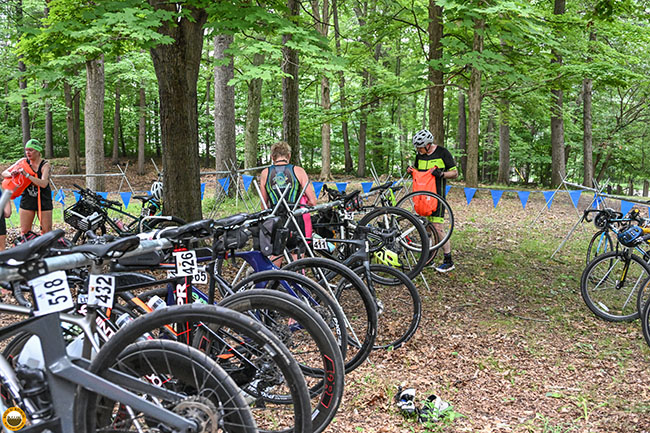
I left my helmet with my bike and ran down to the water. It was time to get my swim buoy out of the hydration pack and put the pack inside the buoy. I only needed my swim cap and goggles and everything else went inside the buoy. Between the run from the bike to the water and getting all of my stuff situated, the transition took me 4:53.
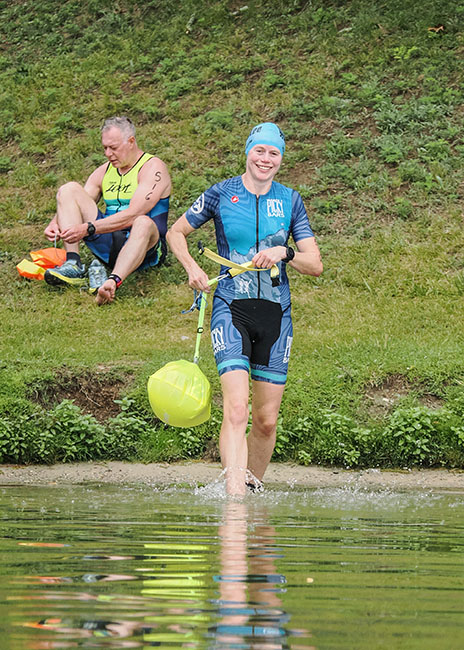
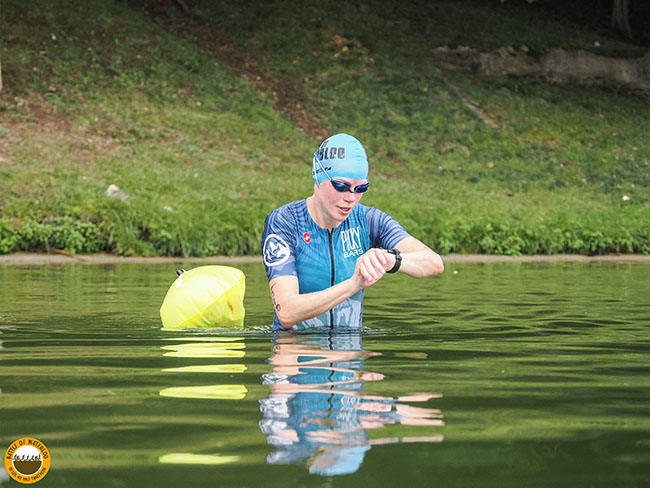
After the tough workout of the bike ride, I was really looking forward to swimming – something I enjoy much more.
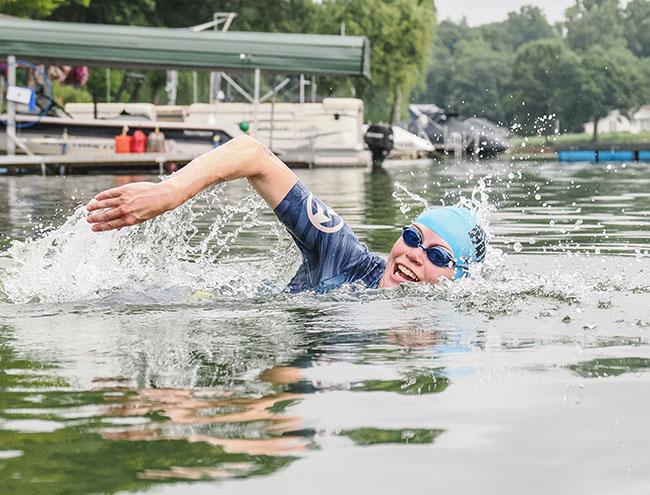
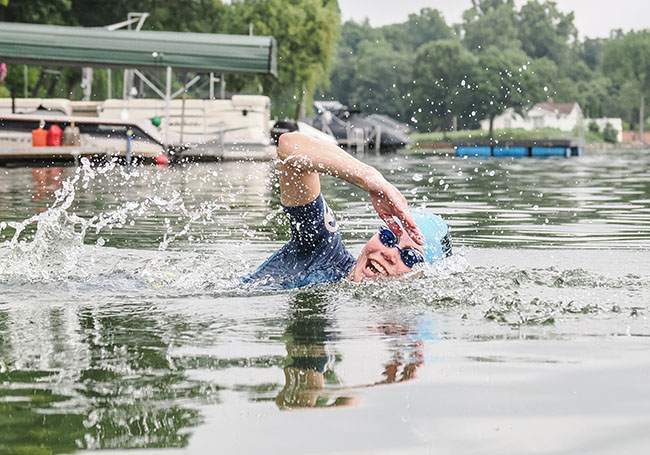
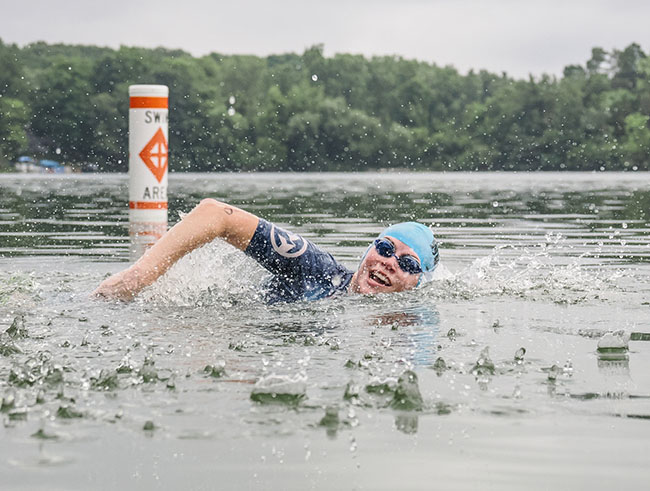
When looking through my notes for the race, one important thing I had to remember was to inflate my buoy as much as possible. I thought I had but it felt like it was dragging a bit during the first swim. Still, I had a good first swim across Clear Lake. I recorded 17:49 for that leg.

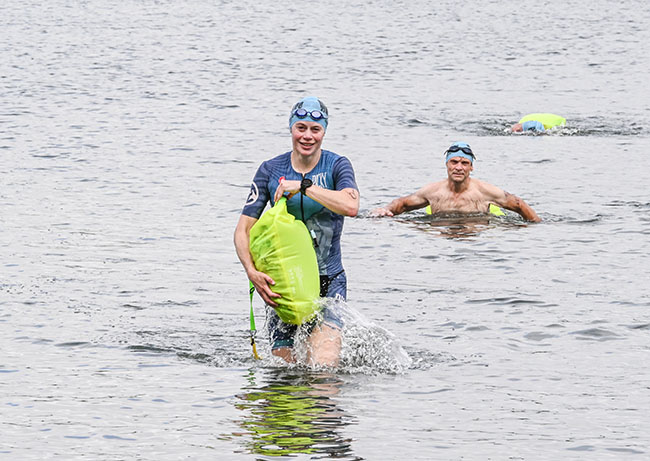
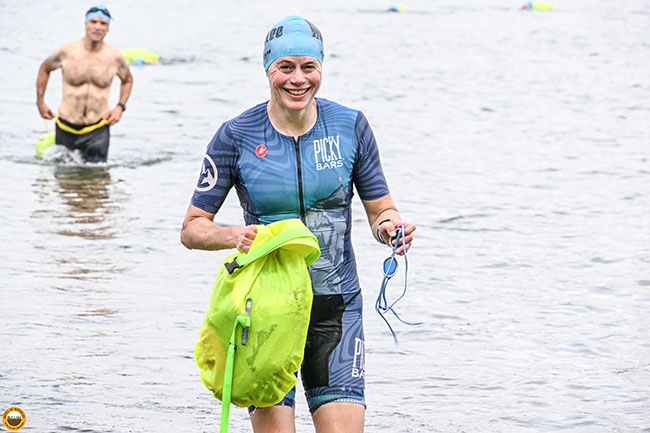
We were told that the lakes ranged from 78-80° which was perfect for swimming.
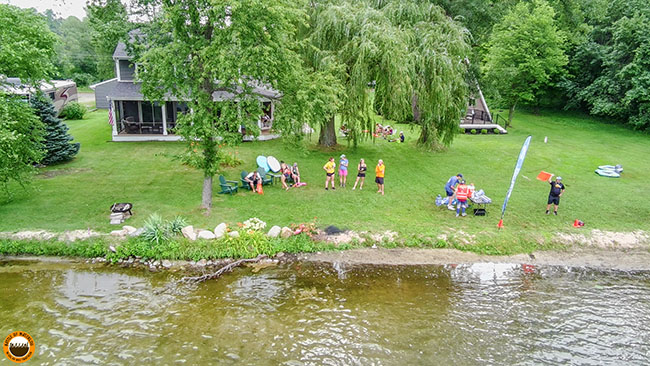
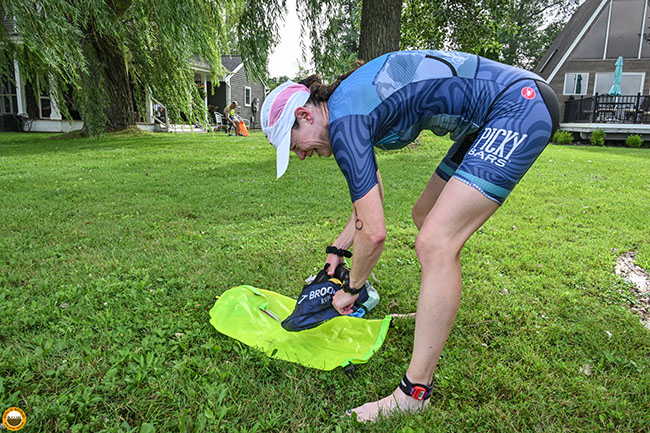
My second transition took 2:56. The run from Clear Lake to Mill Lake took us on a segment of the Waterloo-Pinckney Trail. The actual distance may vary because my Garmin may not have correctly tracked me in the woods.

That run was pretty decent and took me 34:08. But the BUGS! They were so awful and I was constantly swearing at them to go away. During other run segments I sometimes took advantage of aid stations that had bug spray to share.
My second transition took 3:15 then it was time to swim across Mill Lake – aka “the one with the lily pads.” Only people as crazy as us would swim through a lake like that. As if the lily pads weren’t challenging enough, the weeds in general were really thick. I couldn’t help but think that the swim was the material of nightmares. It was as if the plants were trying to tangle me and pull me under. I tried to mix some breaststroke in to see if it would help but I didn’t figure out any good technique. My arms and legs got stuck at times no matter what I did. I basically waded my way through some parts. There was someone in a kayak who was watching out for us and could help if we needed it and obviously I DID survive it.

The totally straight line my Garmin recorded for this swim tells me that it probably didn’t pick up my signal very well through all of the weeds and just tracked the start and finish. My open water swims never look this smooth! It took me 13:44.
At that point I had to save the first five legs on my Garmin and start a new program. Garmin only allows five stages for its multisport setting. I spent a minute waiting for it to save and to get my next five legs started. That meant I couldn’t record a true transition between the swim and run, but I can see that it took 2:42 before my pace suddenly picked up.
There were enough aid stations along the way between one at the end of the swim/start of the run, one along the way, and another at the end of the run/start of the next swim. I had my own electrolyte drink because sometimes Gatorade is too strong and doesn’t sit right with me. I did grab water at many of the stops though and ate some of my Clif Bloks along the way.
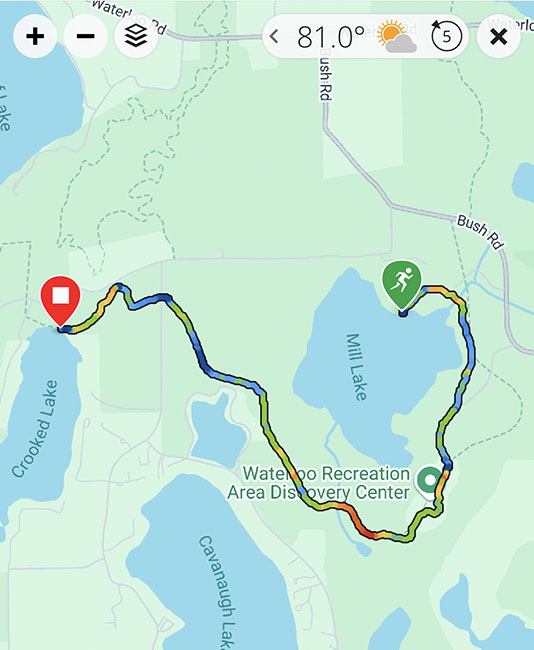
The run from Mill Lake to Crooked Lake took us on the Waterloo-Pinckney Trail again. The trails weren’t overly technical but there were plenty of roots and rocks to watch for and potential ankle-turning spots. By the time I got to the later runs I wished I had been doing regular hill repeats to prepare! As it got warmer, it was especially helpful that we had shade on the trails for the runs. I just could have done without the damn bugs!
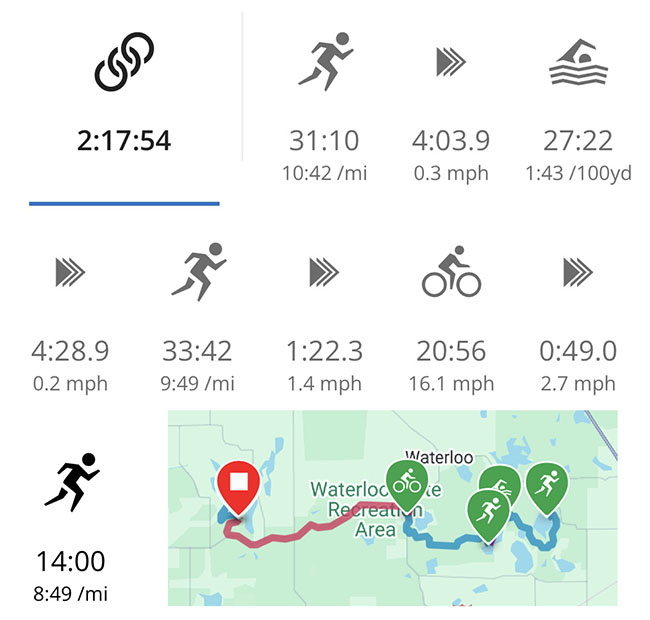
Between my swim to run transition and the 2.9 miles of running, I recorded 31:10 for the sixth leg then I took 4:04 to transition to the final swim. I took extra time to make sure my goggles were secure since the final swim was close to a mile long.
The swim across Crooked Lake was especially enjoyable for me. The water was calm and felt great. It just got a little tricky when it was time to stand up and walk my way into shore. Most of the swims didn’t exactly start or end at nice beaches. They were pretty random spots where I would sometimes stand up to walk then change my mind and try to swim in further because the footing was loose or rocky.
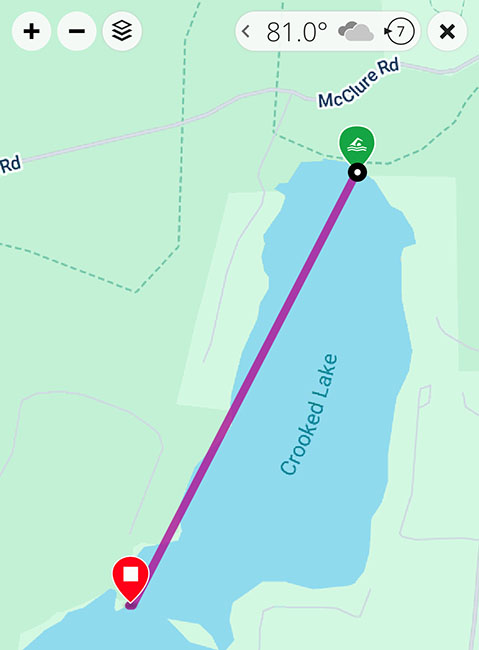
Once again, the straight line my Garmin recorded is a little too perfect. It said I swam .9 miles and the info for the race said it was .7 miles. It could vary based on the buoy placement, how much I actually stayed on track, etc. It’s all a rough estimate. I recorded 27:22 for the final swim.
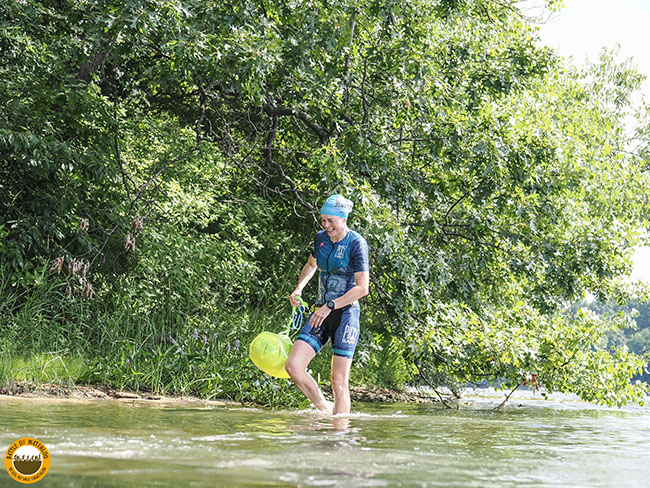
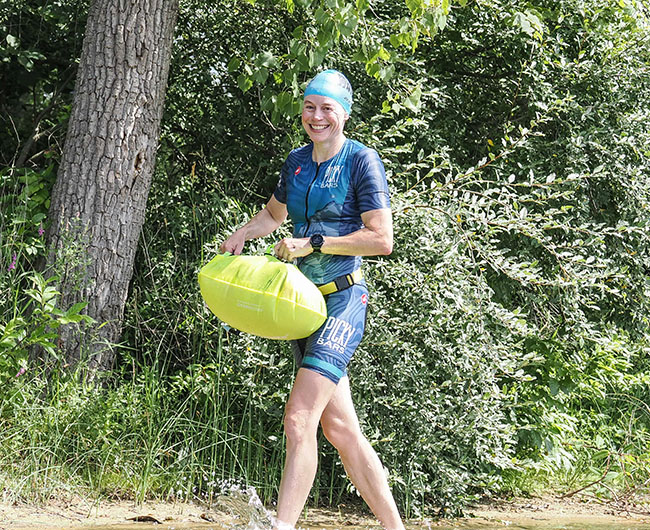
I took way too long during the transition, partially because I couldn’t seem to get my swim buoy to fit into my hydration pack. The back pocket is fairly skinny and can be a tight squeeze. It’s one thing I may have to change about my method for future races. I got going on my run after 4:29 in transition.
The run from Crooked Lake took us on some dirt roads with challenging climbs. The last couple times I did the race we ran through a gravel pit which gave us a cool backdrop for photos. It was all grown over with grass this time so it wasn’t as exciting and all I could concentrate on was the huge hill that took us out of that area! That run segment was TOUGH with the hills. I rarely walk during my runs but that changes during this race. After being on the go for several hours the steep inclines on the trails and dirt roads felt especially harsh. I saw people ahead of me walking which made it easier for me to accept that it was the only way I’d get through it. We had another chunk on the Waterloo-Pinckney Trail before we got to Clear Lake Road, which took us back to the park where we had left our bikes.
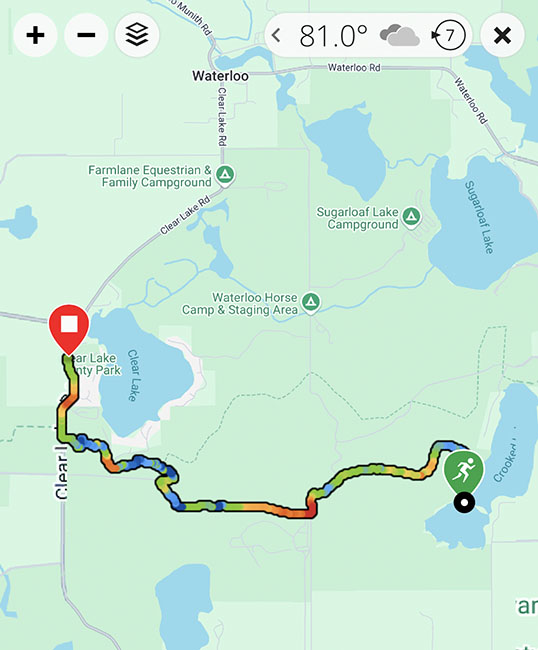
It was great to be greeted by drummers because that sound told me I was almost to the transition area and that motivated me to keep moving. I finished that run in 33:42.
We were encouraged to stop at the aid station so I grabbed some water, took my hat off and stuck it in the outer pocket of my vest, then headed out on the bike with a transition time of 1:22.

I knew that I could expect my legs to feel wrecked for the start of the ride so I tried to keep it as easy as I could. At least the final ride was on decent roads. I got through the ride in 20:56, which was around 16.1 mph.
The final transition was a quick 49 seconds because I just had to park my bike, swap my helmet for a second hat I had left in transition, then I left my vest behind. It was freeing to run without any extra weight. At least I ONLY had 1.6 more miles to go.
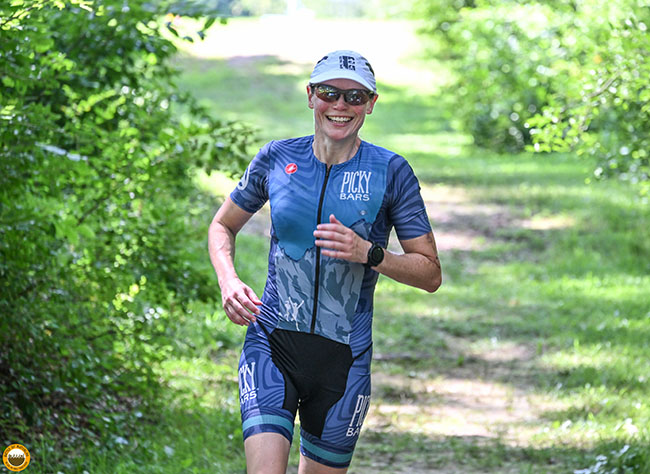
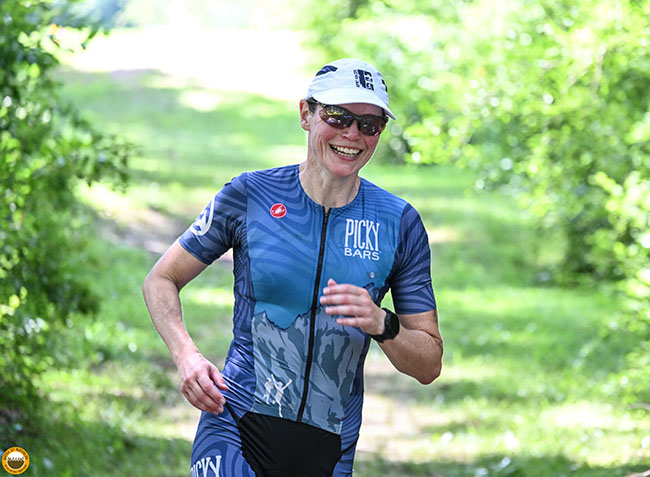
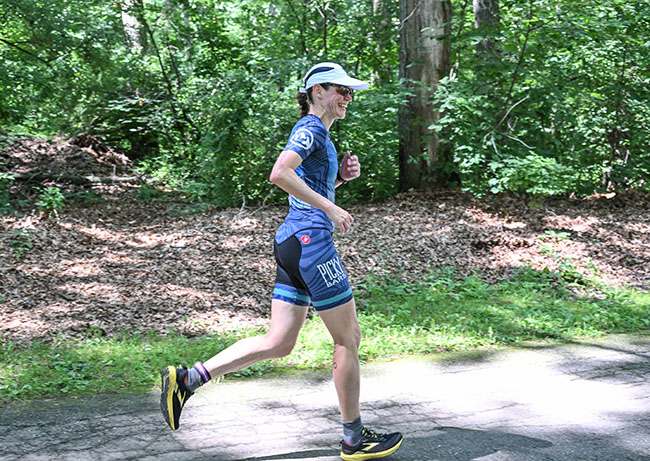
The last run went surprisingly well and my watch says my pace averaged 8:49 per mile for 14 minutes. Seeing Angela from Epic Races and Greg Sadler out there a couple times for the final run helped lift my spirits and kept me smiling.
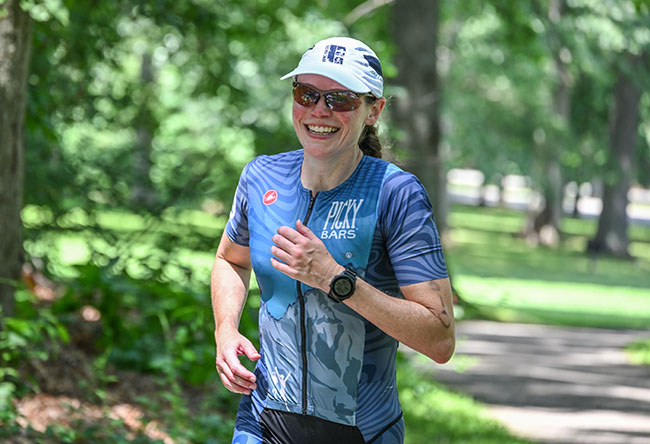
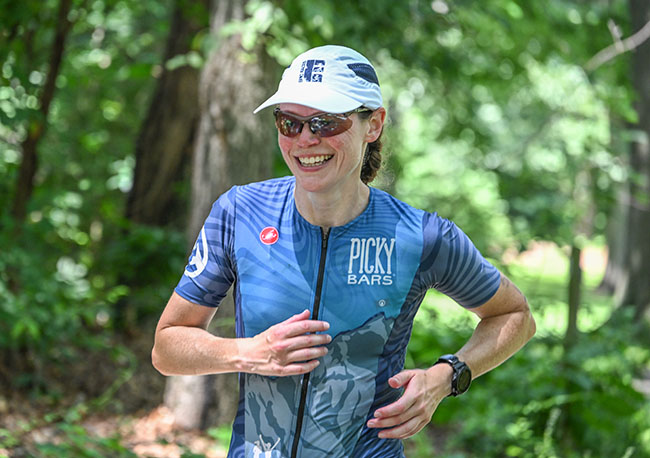

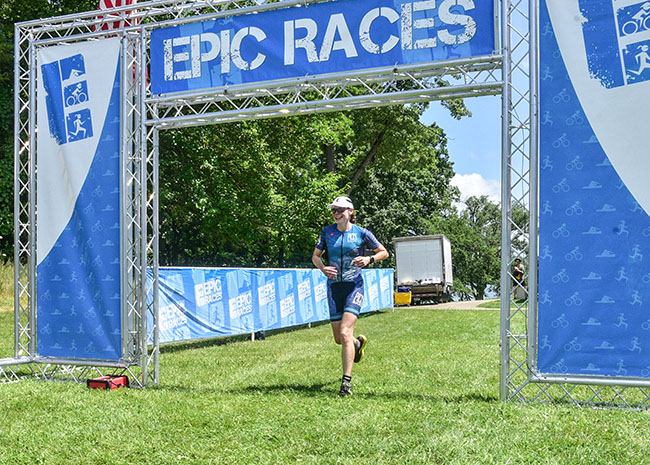
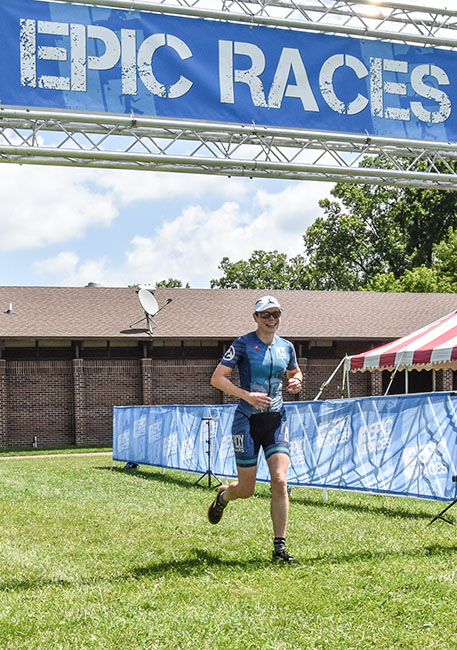

DONE!! I didn’t sneak in under five hours, but I finished in 5:01:47.

I was pretty shocked to hear that I was the second woman. I really had no idea how I’d been doing out there. The race was spread across so many segments that it was hard to gauge where I stood. I just knew that it felt like a struggle for me but I must not have been alone. This thing is probably hard for everyone! I chatted with another athlete afterward and we both agreed that it felt harder than a half Ironman. Running the hills on trails and dirt roads felt brutal at times. They are both tough challenges and it’s probably hard to compare, but at least on this day it seemed harder!
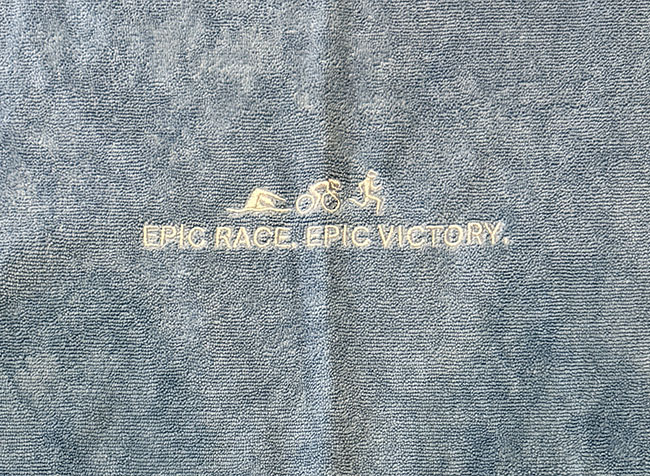
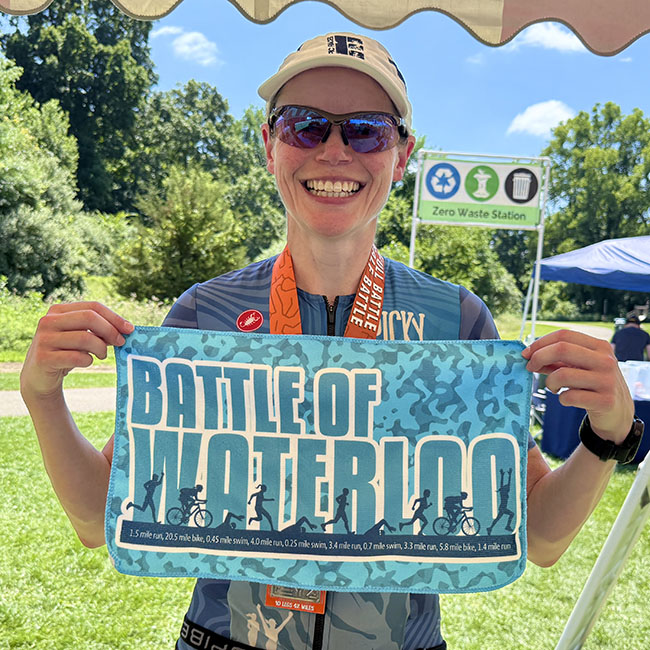
After getting some food (pancakes, mac and cheese, an egg and cheese wrap, a cookie, and an ice cream sandwich!) and chatting with a couple other athletes, I finally checked in at the awards table. I got a towel for placing first in my age group.
Since this was my third time doing the race, I was curious how I compared to past years. This time I was within a minute or two of my first time when I made it just under five hours. The bike course was cut short by about six miles due to poor conditions the second time I did it so I really can’t compare those results. I feel like I was especially beat up by the hills on the run this time but maybe time helped me forget how brutal it could be!
So many things can happen during a race this long with so many stages. One of the photographers said a lot of people had water get into their buoys. I heard a ton of people talk about suffering from cramping. Some people made wrong turns. If others hadn’t dealt with some of those struggles, they surely could have finished ahead of me. It’s all a part of the adventure though and I was fortunate that things went relatively smoothly for me. As much as I thought I was too slow on the bike or took too long in transitions, it worked out well enough. Although I fumbled around too much trying to get my buoy into my hydration pack, that vest may have saved me from cramping since it helped me stay on top of fueling.
I spent many moments swearing as I dodged potholes, climbed hills, swatted bugs, and tried to untangle myself from weeds in the water. Yet by the next morning I was already brainstorming about how to improve things next time because I definitely want to do it again. It’s amazing how quickly the struggles fade and the sense of accomplishment is what sticks with me. It feels pretty badass to complete something like this and there are few people who even take on the challenge.
Many thanks to the Epic Races team for offering such a unique experience. They always provide such a supportive and welcoming environment for people of all paces. A LOT of work goes into something this involved. The volunteers were also amazing for spending hours at the aid stations on a hot day with bugs surely trying to eat many of them as well.
I always come away from this race feeling like I can accomplish really hard things and I’m very grateful that my body allows me to do this crazy stuff.
– Janet
Follow me on Instagram @janetboltz
 Miles Fly By
Amazing and wonderful! Congratulations on a race that was beyond my imagination! SFP
Thank you so much!